
Cure SMA: A Hybrid 2D/3D Mechanism of Action Animation That Explains AAV Gene Therapy
For Cure SMA, we turned AAV gene therapy into a clear four-minute MoA animation, blending 2D illustration with 3D molecular detail.
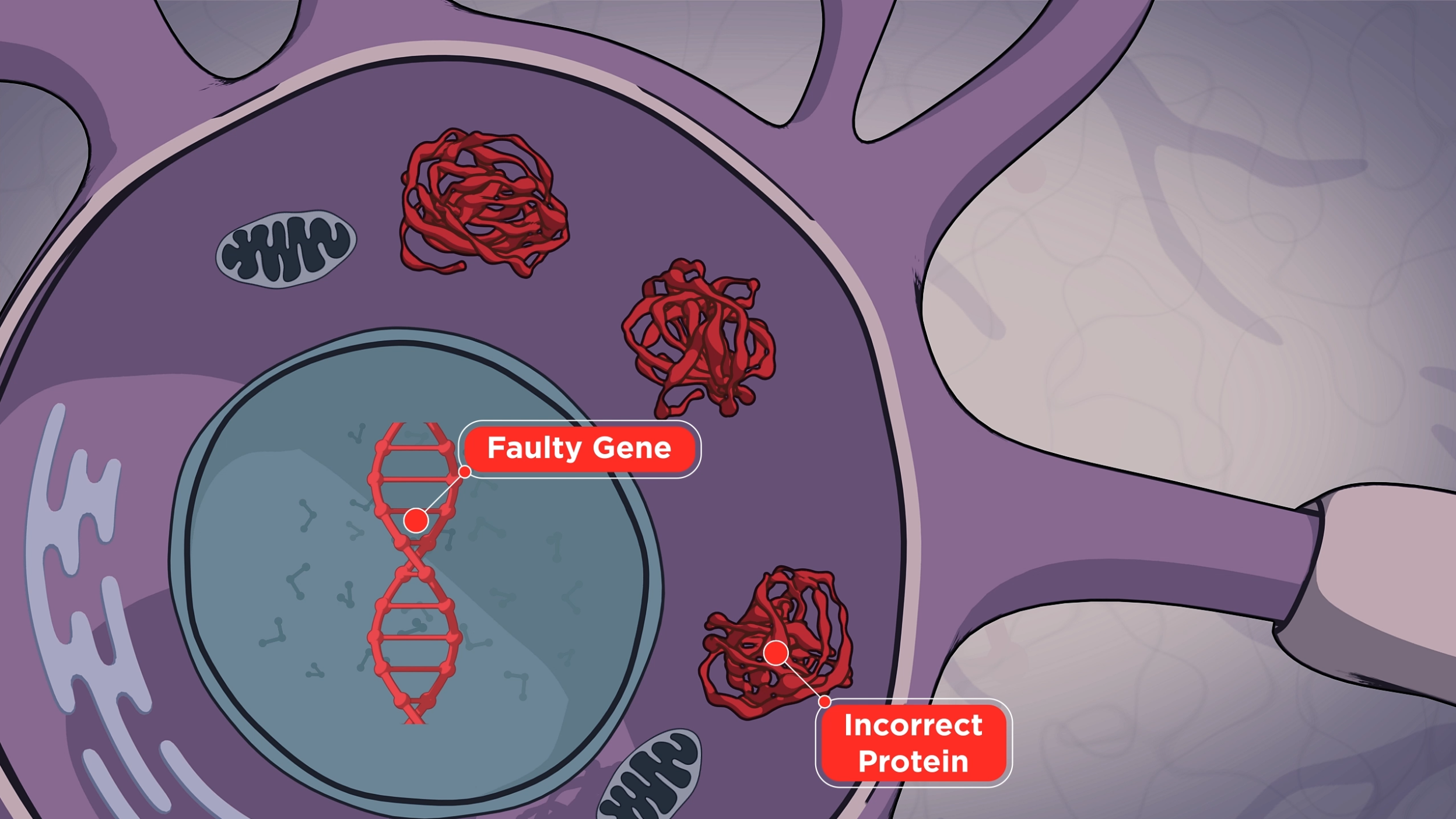
Medical animation case study · Gene therapy · Rare disease · Patient education
What MoA animation did Intervoke create for Cure SMA?
Intervoke created a hybrid 2D/3D mechanism of action animation for Cure SMA that shows how AAV gene therapy delivers a working copy of the SMN1 gene to motor neurons. The video moves from "genes as blueprints" to capsid targeting, delivery routes and FDA approval in about four minutes, and Cure SMA uses it to help families understand how gene therapy works before making treatment decisions.
The challenge: explaining gene therapy to families, not scientists
Gene therapy is one of the most complex mechanisms in modern medicine, and Cure SMA needed to explain it to people who don't have a science background: individuals living with SMA and the parents and caregivers helping them make treatment decisions.
The brief was to show how adeno-associated virus (AAV) gene therapy uses a modified virus to deliver correct genetic material into cells, replacing faulty or missing genes, while staying honest about the science. That meant covering delivery routes, immune response and clinical testing for safety and effectiveness, without promising more than the evidence supports.
The story had to build understanding step by step. Viewers needed to grasp what a gene is before they could understand what happens when one is missing, and they needed to understand what's missing in SMA before a gene replacement therapy would make sense.
The solution: a 12-scene MoA story, from DNA to recovery
Our scientific writers structured the script as a guided zoom: from the whole body, down into the cell, into the nucleus, and back out to the patient. Each scene answers one question before the next one asks another.
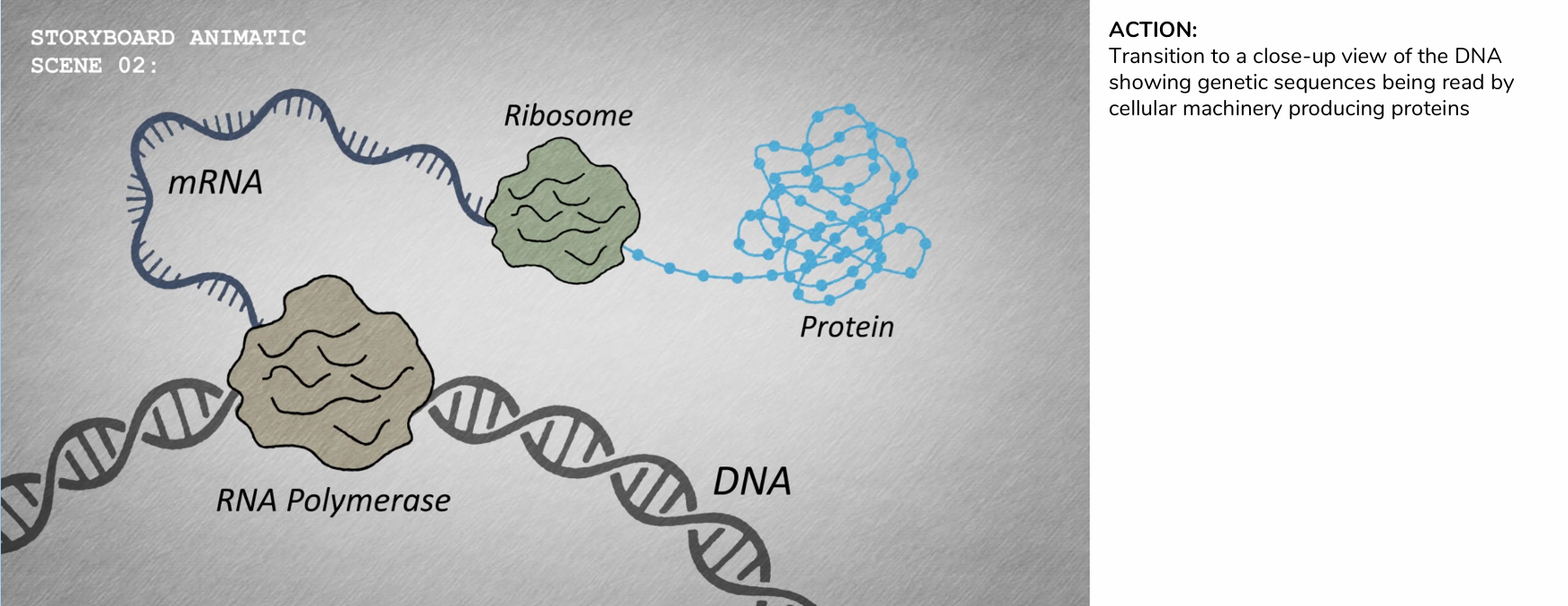
Scene 02 is a good example of the approach. The storyboard animatic establishes the transcription and translation sequence (RNA polymerase reading DNA, mRNA feeding the ribosome, a protein chain folding) with clear on-screen labels so the viewer always knows what they're looking at.
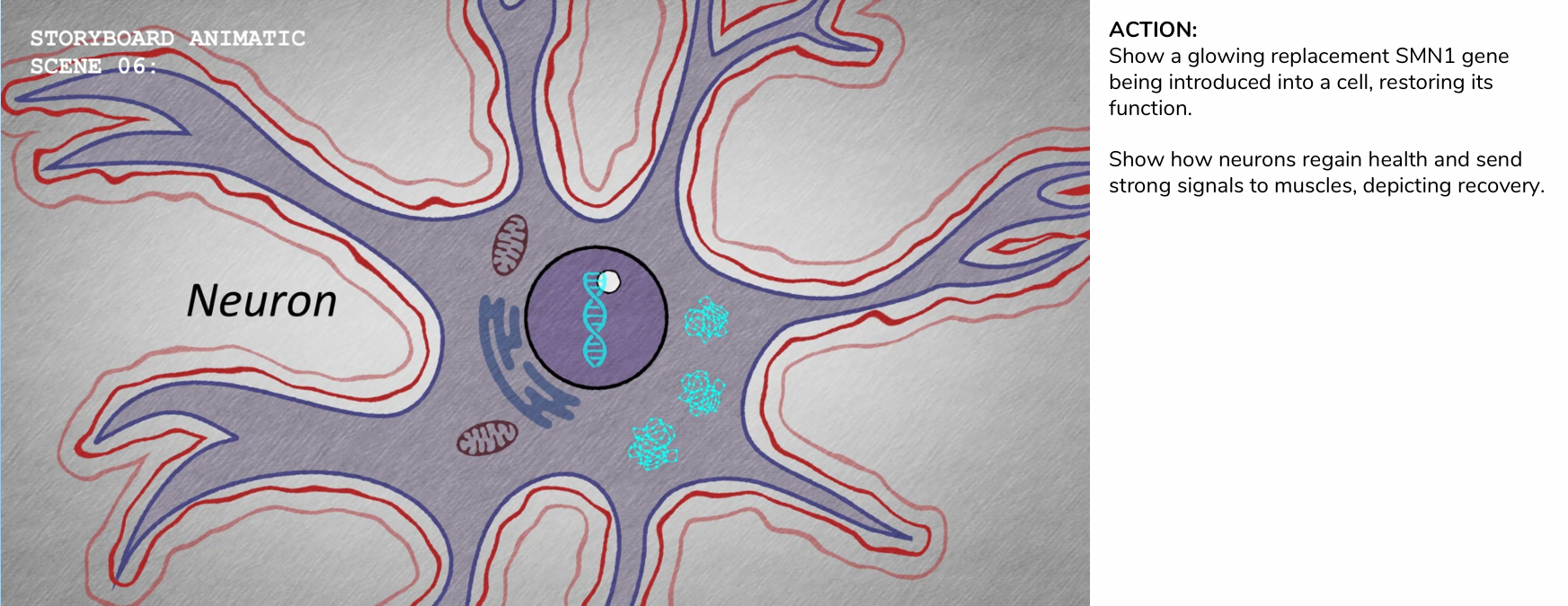
Scene 06 is the emotional turn of the video. A glowing replacement SMN1 gene enters the nucleus of a motor neuron, and the cell begins producing the protein it was missing. The neuron regains health and sends strong signals to the muscles, giving families a clear picture of what gene replacement therapy is designed to do.
How is this animation a hybrid of 2D and 3D?
This Cure SMA video is a hybrid 2D/3D medical animation: hand-designed 2D illustration provides the warm, approachable look families respond to, while 3D-built molecular elements add the depth, rotation and camera movement that make cellular biology feel real. Our 2D/3D generalists worked in both pipelines and composited them into one consistent visual world.
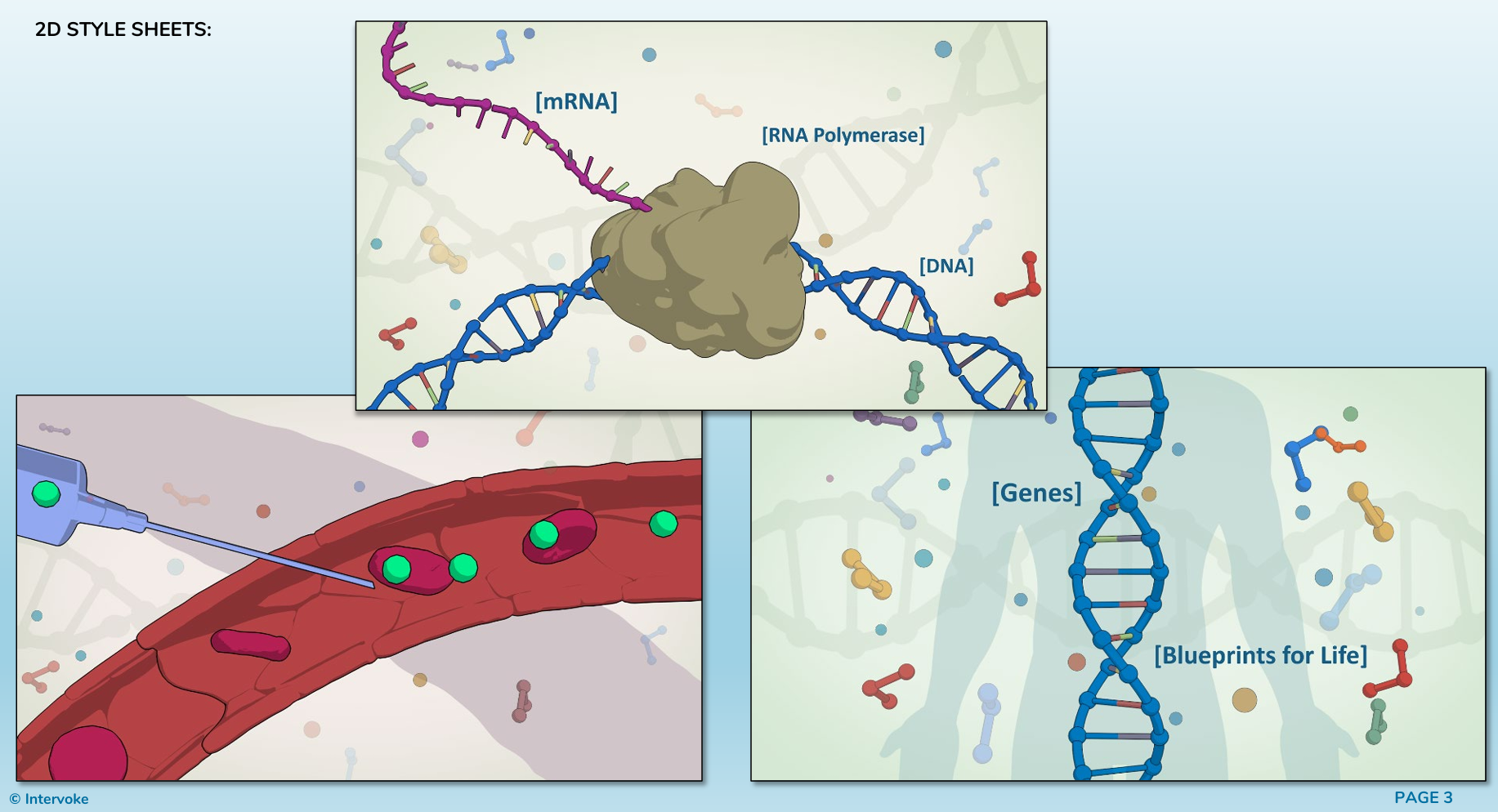
The 2D layer carries the storytelling. Characters, environments, cells, blood vessels and labels were created as clean, layered vector graphics in Adobe Illustrator, with every element that needed to move on its own layer. Those files were brought into After Effects and animated with keyframes, effects and parenting. The flat, illustrated style keeps the video friendly and readable, and its bold labels ([mRNA], [RNA Polymerase], [DNA], [Genes]) reinforce the narration for viewers who are learning the vocabulary for the first time.
The 3D layer carries the science. The molecular "hero" assets, including the DNA double helix, the ball-and-stick molecules floating through each scene and the dimensional protein structures, were built to read as volumetric objects and then styled with cel-shaded color and outlines so they sit inside the 2D world without clashing. That lets the double helix swirl and rotate in Scene 01, gives the camera real depth to travel through, and keeps molecular shapes consistent from every angle.
Compositing ties it together. In post-production, the rendered 2D and 3D layers were composited with visual effects such as glows on the working gene and AAV particles, depth-of-field background helices, plus stock music and sound effects. The style sheets locked the shared color palette, line weight and texture early, so viewers experience a single cohesive look rather than two techniques side by side.
Why hybrid works for MoA videos: pure 3D can feel clinical and is costly to iterate; pure 2D can flatten structures that are inherently three-dimensional. A hybrid gives life sciences teams the scientific credibility of 3D with the clarity, speed and editability of 2D, and individual 2D layers stay easy to update when content or regulatory language changes.
Our process: from script to final render
Phase 1: Script and style sheets. Our scientific writers developed the narration script for a patient and caregiver audience, with full consultation in tracked changes and supporting references. In parallel, we built 2D style sheets defining the palette, textures, character design and molecular look for the whole video.
Phase 2: Storyboards, voice-over and animation. We created storyboard illustrations for each of the 12 scenes, then cast a professional voice-over recorded at 140 to 150 words per minute for comfortable comprehension. Low-resolution animatics let us fine-tune timing, camera moves, labels and transitions before full production. Every sequence was shared on a secure, password-protected Vimeo review page where Cure SMA's team left time-stamped comments directly on specific frames.
Phase 3: Post-production and delivery. We composited all rendered layers, added visual effects, music and sound design, and delivered the final 30 fps MP4 at 2560 × 1440 along with the requested source files.
From storyboard to style sheet
The images below show how the visual language developed: grayscale storyboard animatics to lock story and timing, then full-color style sheets to define the final hybrid look.
The outcome
Cure SMA published the finished animation on May 19, 2025 as "Understanding Gene Therapy: A Cure SMA Video," a resource that helps individuals with SMA and their caregivers understand how gene therapy works. Because the video explains the mechanism of AAV gene therapy rather than a single branded product, it stays useful across conversations about SMA treatment options and gene therapy for rare disease more broadly.
The production went from kickoff to final delivery in under eight weeks.
Why life sciences marketing teams choose Intervoke for MoA animation
- Science-first storytelling. Scientific writers build every script with references, so the medical, legal and regulatory review starts from solid ground.
- The right technique for the message. We choose 2D, 3D or a hybrid based on the audience and budget, not a one-size-fits-all pipeline.
- Transparent review. Frame-accurate, time-stamped feedback on Vimeo keeps stakeholders aligned and revisions fast.
- Assets built to last. Layered, editable source files make updates and cut-downs for social, congresses and sales training straightforward.
Frequently asked questions
What is a mechanism of action (MoA) animation? An MoA animation is a video that shows how a drug or therapy produces its effect in the body, usually at the molecular and cellular level. Pharma, biotech and patient advocacy organizations use MoA videos to educate healthcare providers, patients, caregivers and investors.
What is a hybrid 2D/3D medical animation? A hybrid medical animation combines illustrated 2D artwork with 3D-built elements in a single, consistent style. 2D handles characters, environments and labels; 3D handles structures that need depth or rotation, such as DNA, proteins and viral capsids.
When should a life sciences brand choose hybrid animation over full 3D? Hybrid animation is a strong fit when the audience is patients or caregivers, when the brand wants an approachable look, or when content is likely to change and needs to be easy to update. Full 3D is often the better choice for photoreal HCP-facing MoA videos and medical device visualization.
How long does it take to produce an MoA animation? Timelines depend on length and complexity. This roughly four-minute hybrid MoA video for Cure SMA moved from kickoff to final delivery in about eight weeks, including scripting, storyboards, voice-over, animation and post-production.
Can Intervoke animate gene therapy and rare disease mechanisms? Yes. This project covers AAV vectors, capsid modification, SMN1 gene replacement, systemic vs. targeted delivery and immune response, all mechanisms common to gene therapy programs in rare disease.
Ready to explain your mechanism of action?
Intervoke is a medical animation studio that helps life sciences teams turn complex science into clear, compliant MoA videos in 2D, 3D and hybrid styles. Tell us about your therapy and audience and we'll recommend the right approach.
Let’s Get Started
Interested in learning more about how Intervoke can bring your science to life?
Contact us or book a Discovery Call to get started.


