
Beyond Medical Animation: Interactive 3D and Scientific Communication for Life Sciences
Discover how Intervoke is moving beyond traditional medical animation with interactive 3D, surgical visualization, scientific communication, and BioCloud 3D to create scalable experiences for life sciences.
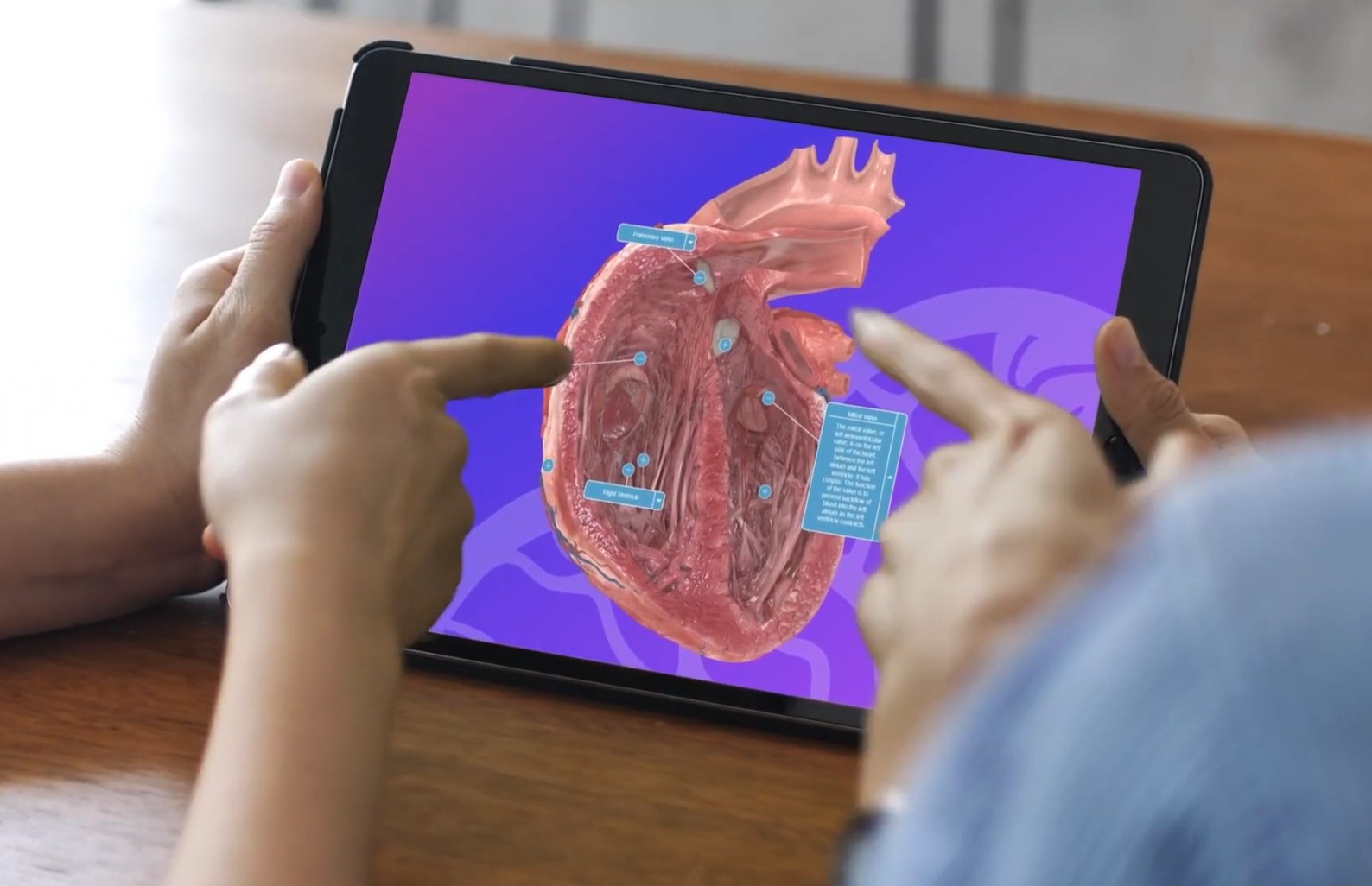
Medical animation is evolving into something much more interactive. Pharmaceutical, biotechnology, and medical device companies are increasingly using interactive 3D, surgical visualization, medical device animation, and immersive scientific communication to explain complex science to healthcare professionals, patients, sales teams, and investors.
At Intervoke, we combine medical animation, interactive 3D technology, scientific visualization, and software development to create scalable scientific experiences for life sciences organizations.
Traditional medical animation remains one of the most effective ways to communicate difficult scientific concepts. It can reveal mechanisms of action, demonstrate medical devices, visualize disease progression, and help patients and healthcare professionals understand complex anatomy and procedures.
But life sciences communication is changing.
Today, organizations increasingly need more than a finished animation. They need scientific content that can be explored, adapted, embedded, presented, and reused across multiple audiences and channels.
Intervoke is helping move scientific communication beyond traditional medical animation by creating interactive scientific experiences that combine high-end 3D medical visualization with interactive technology.
From Watching Science to Exploring It
Traditional medical animation is linear. The viewer watches a carefully produced sequence from beginning to end.
Interactive 3D medical visualization changes that relationship.
Instead of simply watching an anatomical structure, therapeutic mechanism, surgical procedure, or medical device demonstration, users can actively explore it. They can rotate anatomy, isolate structures, reveal layers, compare states, examine devices, and move through a scientific story at their own pace.
For healthcare professionals, this can create a more engaging form of interactive healthcare education and HCP training.
For patients, it can make complicated anatomy, treatments, procedures, and medical devices easier to understand.
For commercial and marketing teams, interactive 3D creates a more flexible way to communicate scientific value.
See how Intervoke uses interactive 3D to create scalable scientific communication experiences for pharmaceutical, biotechnology, and medical device organizations.
One Scientific Experience, Many Applications
One of the biggest challenges in life sciences marketing is the constant need to recreate scientific content for different audiences.
A pharmaceutical company may need a mechanism of action animation, a mechanism of disease animation, a website experience, a congress presentation, HCP education, patient education, investor presentations, and interactive content for sales teams.
Medical device companies face a similar challenge. A single device may require medical device animation, medical device training, surgical visualization, procedural education, patient education, sales demonstrations, and conference experiences.
Interactive scientific communication makes it possible to build a core 3D experience that can support many of these applications.
Instead of treating every deliverable as an isolated project, companies can create scientific assets that become part of a broader communication ecosystem.
Interactive Medical Device Education and Training
Medical devices are particularly well suited to interactive visualization.
A traditional medical device animation can demonstrate how a device functions during a procedure. An interactive experience can go further by allowing users to examine the device itself, understand individual components, explore its relationship to surrounding anatomy, and move through procedural steps.
For healthcare professionals, this can support medical device training, surgical education, procedural visualization, and HCP training.
For patients, interactive 3D can help explain both the procedure and, when appropriate, how a medical device should be used.
For sales and marketing teams, the same technology can transform a presentation into an interactive product demonstration.
This creates a more engaging and reusable approach to medical device education across the organization.
Making MoA and Disease Education More Engaging
Mechanisms of action and mechanisms of disease often involve biological processes that cannot be seen directly.
MoA animation and MoD animation make those processes visible.
Interactive 3D takes the next step by allowing audiences to investigate them.
Users can move through anatomy, reveal specific structures, compare healthy and diseased states, or explore how a therapeutic interacts with a biological target.
This creates new opportunities for pharmaceutical and biotechnology companies to turn complex scientific information into experiences that are visually compelling, scientifically accurate, and easier to understand.
For life sciences marketing and medical affairs teams, interactive MoA and MoD experiences can also provide greater flexibility across presentations, educational programs, sales tools, and digital campaigns.
Building Interactive Healthcare Education for HCPs and Patients
Healthcare professionals and patients do not need the same level of scientific information.
That does not mean organizations need to build completely separate visual ecosystems for every audience.
A well-designed interactive healthcare education platform can use the same underlying scientific assets while changing the depth, language, navigation, and presentation for each group.
An HCP experience might focus on mechanism, anatomy, clinical context, procedural technique, therapeutic differentiation, or device operation.
A patient-facing experience might emphasize understanding a disease, preparing for a procedure, learning how a therapy works, or becoming more comfortable using a medical device.
The science remains consistent while the communication adapts to the audience.
This approach can support HCP education, patient education, patient engagement, and scientific communication while reducing the need to continually recreate content from the ground up.
Extending Scientific Content Across the Life Sciences Organization
Interactive scientific experiences can extend far beyond a single website or campaign.
They can be integrated into websites, sales tools, learning management systems, conference displays, touchscreen exhibits, presentations, portals, training platforms, and digital marketing campaigns.
This gives life sciences organizations greater flexibility while allowing valuable scientific content to work across marketing, medical affairs, commercial teams, HCP education, patient engagement, and internal training.
It also creates a more consistent scientific story across the organization.
For pharmaceutical, biotechnology, and medical device companies, this can turn individual visual assets into a scalable scientific communication strategy.
Intervoke is also advancing this approach through BioCloud 3D, a browser-based interactive scientific communication platform designed to give life sciences organizations greater control over branded 3D experiences for HCP education, patient engagement, medical device training, and scientific marketing.
BioCloud 3D allows organizations to use interactive 3D anatomy and scientific content across websites, portals, presentations, learning environments, and digital applications. Experiences can be adapted for different audiences while maintaining consistent branding and scientific messaging.
For life sciences teams looking to scale interactive content, BioCloud 3D provides a way to move beyond one-off deliverables and build reusable scientific experiences that can support multiple campaigns, departments, and audiences.
Medical Animation, Interactive 3D and Surgical Visualization
Intervoke brings together medical animation, interactive 3D, surgical visualization, 3D medical visualization, scientific communication, and interactive software development.
Our work spans mechanism of action animation, mechanism of disease animation, medical device animation, surgical and procedural visualization, interactive anatomy, HCP training, patient education, patient engagement, touchscreen experiences, virtual and augmented reality, and browser-based 3D applications.
This combination allows us to think beyond the individual animation.
We can begin with the scientific communication challenge itself and determine whether the best solution is a traditional medical animation, an interactive 3D application, a surgical visualization experience, an immersive installation, or a combination of several technologies.
The result is scientific content designed not only to communicate clearly, but also to scale across audiences, platforms, and departments.
Interactive 3D for Life Sciences Marketing
Life sciences marketing increasingly requires content that can work across websites, conferences, sales presentations, educational programs, and digital campaigns.
Interactive 3D gives marketing teams the ability to create more engaging scientific experiences while maintaining control over how complex information is presented.
A single interactive experience can support pharmaceutical marketing, biotechnology communications, medical device marketing, HCP education, patient engagement, and sales enablement.
This makes interactive 3D for life sciences more than a visual technology. It becomes a flexible communication tool that can support the entire customer journey.
The Future of Scientific Communication Is Interactive
Medical animation will continue to play an essential role in life sciences communication.
But the next generation of scientific communication will increasingly allow people to do more than watch.
They will explore.
They will interact.
They will control how they experience the science.
For pharmaceutical, biotechnology, and medical device companies, this creates an opportunity to build scientific communication that is more engaging, more reusable, and more adaptable across audiences.
Intervoke is helping life sciences companies make that transition by combining the storytelling power of medical animation with interactive 3D, surgical visualization, interactive healthcare education, and advanced scientific communication technology to create experiences designed for the way healthcare communication is evolving.
Through both custom interactive development and platforms such as BioCloud 3D, Intervoke is helping life sciences organizations move beyond individual visual assets toward scalable, branded scientific communication experiences that can grow with their marketing, education, and engagement needs.
Contact Intervoke to discuss your medical animation, interactive 3D, surgical visualization, scientific communication, medical device training, patient education, or custom interactive medical application project.
Let’s Get Started
Interested in learning more about how Intervoke can bring your science to life?
Contact us or book a Discovery Call to get started.


.png)
.png)

.png)

