
Medical Animation
Medical Animation for Pharma and Life Sciences
Our experience includes mechanism of action and mechanism of disease animation, medical device visualization, HCP training, and patient education. We visualize drug-target interactions, cellular pathways, immune responses, gene and cell therapies, disease progression, procedural steps, device function, and therapeutic outcomes at the molecular, cellular, and anatomical level. Every project is tailored to the science, intended audience, brand, communication goals, and required level of technical detail, helping physicians, medical science liaisons, commercial teams, patients, caregivers, and investors understand complex information with greater clarity.
Intervoke combines scientific storytelling, experienced production leadership, medical animation, and interactive technology to create content that is both visually powerful and scientifically credible. We work closely with client scientific teams, medical experts, writers, and subject-matter specialists through a structured process of discovery, scripting, storyboarding, visual development, review, and final production. The resulting assets can be adapted across MoA and MoD videos, HCP and patient versions, websites, conferences, presentations, training programs, social media, still imagery, and interactive 3D experiences, giving life sciences organizations a consistent and reusable foundation for scientific communication.
Planning Your 3D Medical Animation
The length of 3D animation is essential to consider when producing a video. This affects the amount of work and is vital for budgeting. Depending on the desired detail level or complexity, a certain visual quality or style may require more time. For example, if you want photorealism, your animation will require additional computer rendering time to achieve realism. Additionally, some videos benefit from spending more time on development, which increases the video's duration and quality. Lastly, the duration or length of the animation should be considered.
For example, if you are looking for photorealism, your animation might require additional rendering time to achieve realism. Additionally, some videos might benefit from spending more time on development, which increases the duration of the video as well as its quality.
It's important to consider all of these elements when planning a 3D animation project, as they will affect both cost and the timeline. If you are unsure of what length is optimal for your project, we can help you decide on the right balance between budget and quality. With the right approach, your 3D animation will be well worth the investment.
Don't forget about voice overs. Voice overs play a key role in conveying information, setting the tone, and engaging the audience. A well-executed voice-over can enhance storytelling, make complex topics more understandable, and create a connection with the listener through emotion and personality. In advertising, educational videos, films, and even apps, a clear and effective voice-over helps deliver messages in a way that is memorable and impactful.
As demonstrated by the graphic below, longer videos will naturally have higher production costs. That being said, certain styles may require more time depending on the level of detail or complexity desired.
Note: If you are still determining the optimal length for your project, we can help you decide on the right balance between budget and quality. With the right approach, your 3D animation will be worth the investment.
Three Contributing Factors to 3D Medical Animation Costs

Amount of Detail: The amount of detail required for an effective 3D animation can drastically affect the cost. For example, a simple walk sequence would require less effort and be less expensive than animating someone walking with a walking disorder, which is more complex and time-consuming to illustrate. Consider the ultimate goal for your animation: if you need advanced motions or details that require extra time to represent the accuracy, this will add to the cost. One of the most critical stages is discussing your project goals in detail so we can determine a solid estimate of how much time and money goes into creating a realistic representation of what you're looking for in an animation. Doing so will help ensure you get the most out of your investment in 3D anatomy on screen.
Visual Quality: You may want something simple like 2D flat cartoon-like animations using frame-based iconography and 2D vector graphics. Or choose top-quality photorealistic 3D motion graphics with increased layers and levels of detail. All these differences can drastically increase the animation's potency and make it engaging and memorable. Viewing portfolio examples on our website is a great way to determine the visual quality before deciding. Also, to make it easier, provide us with some visual references, as we can use these to recreate almost any look and feel. Understanding the differences between each style and technique can help ensure you make the right choice to budget for your project.
Total Duration: The length of the 3D animation is an essential factor to consider. Longer animations will require more time and resources and, thus, be more expensive. Having multiple elements in animation, such as a beating heart, with blood flow and other microbiology, can add to the complexity and cost of production. When measuring costs for 3D animations, most studios charge based on each second of animation created. However, it should also be considered that not all parts of an animation are equal; some portions may use the same assets, which can reduce the time required to produce them and subsequently decrease the overall cost.
By keeping track of the amount of detail, quality, duration, and the reuse of specific assets, you can better understand what your 3D animation will cost.
3D Anatomy Model Examples:


Pricing
Costs for medical animation or illustration vary greatly depending on the required complexity and level of work. Listed below is a breakdown of some of the typical details used to determine cost.
Simplistic Animation
Higher Quality Animation
Advanced Animation
Medical Print Graphics Estimated Costs
3D animation may not be your most economical visualization solution if your budget is under a few thousand dollars. An alternative solution is a print graphic such as a 2D or 3D illustration. This will replicate some of the qualities of animation but at a substantially lower cost.
Visual Process Used
Low Detail
High Detail
WebGL Interactive 3D Estimated Costs
3D animation may not be your most economical visualization solution if your budget is under a few thousand dollars. An alternative solution is a print graphic such as a 2D or 3D illustration. This will replicate some of the qualities of animation but at a substantially lower cost.
Visual Process Used
Low Detail
High Detail
3D Modeling Pricing
Project Element
Cost Estimates
Hourly Rate
Process: Freeform modeling to construct, sculpt, paint, and finally animate assets. Using these industry-standard tools: Maya, 3ds max, Topogun, and Zbrush.
These estimates above cannot replace a solid cost calculation based on a detailed briefing and subsequent proposal. This helps eliminate any change orders. Please note any outside scope costs are billed at $90 per hour.
Our Medical Animation Workflow

Every project begins with a collaborative pre-production phase where we define your goals, audience, scope, timeline, and budget. From there, our Project Managers, Art Directors, and Animators develop the creative and technical approach, align the visual direction with your brand, and create a clear production plan.
This process keeps the project organized, aligned, and moving toward a polished final product.
1. Understanding the Subject Matter: The medical writer conducts in-depth research on the drug or treatment, focusing on pharmacodynamics and relevant clinical data.
Key Points: Identify the essential elements of the mechanism of action, such as drug targets and biological pathways.
2. Defining the Target AudienceAudience Analysis: Determine the intended audience, such as healthcare professionals or patients, to tailor the complexity and style.
Level of Detail: Determine the appropriate level of technical detail based on the audience’s knowledge and the client’s budget.
3. Creating an OutlineStructure: Develop a clear outline, typically including:• Introduction to the drug
• Overview of the condition
• Detailed explanation of the mechanism
• Clinical implications
• Summary
Visual Cues: Identify where visuals can enhance understanding.
4. Writing the ScriptDrafting: Write the first draft using clear, concise language and scientifically accurate content.
Engagement: Use storytelling techniques to make the content engaging and relatable.
5. Review and RevisionPeer Review: Have medical professionals review the script for accuracy and clarity.
Revisions: Make changes based on feedback to strengthen and refine the script.
6. Final PreparationStoryboarding: Collaborate with visual artists to create a storyboard that complements the script.
Quality Control: Perform final checks for accuracy and compliance with regulatory standards.This process ensures that the MOA video script is scientifically accurate and effectively communicates complex concepts to the intended audience.

Creating the Storyboard
Develop illustrated frames that represent the key moments of the animation, including anatomical structures, character or device positioning, camera angles, and visual focus.Add descriptive notes for movement, narration, on-screen text, sound effects, camera motion, and transitions.
Medical and Scientific Accuracy
Storyboard visuals are developed using client-approved scripts, scientific references, clinical data, anatomical resources, device specifications, and brand or regulatory guidelines. Our team works closely with client subject matter experts to ensure that anatomy, biological processes, product details, terminology, and mechanisms of action are represented accurately. Any areas requiring clarification are identified during storyboarding so they can be resolved before animation begins. Sequence PlanningOrganize the frames into a clear visual sequence that supports the narration and makes complex scientific concepts easier to understand. Determine the pacing, shot length, transitions, and level of visual detail needed for each scene.
Collaboration and Review
Review the storyboard with the client, medical experts, and production team to confirm scientific accuracy, messaging, visual direction, and overall flow.Feedback is incorporated through revisions before the storyboard is approved for production.
Finalizing the Storyboard
Create polished storyboard frames that serve as the visual blueprint for the animation. Document camera angles, scene timing, transitions, narration, visual effects, and other technical requirements.
Production Preparation
Generate a detailed production plan and shot list based on the approved storyboard. Once the storyboard and scientific content are approved, the animation team can begin production with a clear understanding of the creative, technical, and medical requirements.

1. Creating a voice-over begins with careful script preparation and selecting the right voice talent. The script should be written in a natural, conversational tone that aligns with the intended animation, message, and audience.
2. Once the script is ready, choosing the right voice artist is crucial. Factors like tone, accent, gender, and age play a significant role in conveying the message.
3. We will next hold auditions to find the perfect fit and then review each voice sample with our client. This is when the client can provide input to ensure the voice-over matches the project's goals.
4. The recording process requires professional equipment and a proper environment. High-quality microphones, audio interfaces, and soundproofed rooms help ensure clear audio without background noise or distortion.
5. After recording, the audio undergoes editing and post-production to remove any unwanted sounds, adjust volume levels, and enhance the overall quality.
6. Finally, syncing the voice-over with the animated visuals is an essential step.

The look and feel process begins with the graphics team developing high-quality 3D elements, which serve as foundational assets for the animation phase. These elements are meticulously crafted to align with the overall design vision established during pre-production.
The team focuses on ensuring that the models, textures, and lighting reflect the desired aesthetics, whether it be realistic, stylized, or abstract. Once the 3D assets are finalized, they are passed on to the animators, who use these still images as reference points throughout the animation process.
During this phase, the animators carefully analyze the 3D elements, considering factors like movement, scale, and timing to ensure the animations are fluid and cohesive. Using the still images, they create keyframes and motion paths that bring the characters and objects to life, all while maintaining fidelity to the original concept. This stage is critical for accuracy and consistency, as it allows for the identification of any discrepancies or adjustments needed before full-scale production begins.
Collaborating closely with the graphics team, animators can request revisions to the 3D elements if needed, ensuring that the final animations reflect the envisioned look and feel of the project. This iterative process not only enhances the quality of the animations but also fosters a strong collaborative environment, where feedback is welcomed and integrated into the workflow, ultimately leading to a polished final product that meets the creative goals of the project.

Creating 3D rendered animatics is a critical phase in the animation production pipeline that helps visualize the final product while ensuring alignment with the initial creative vision. This process starts with the approved storyboards and style sheets, which serve as blueprints for the animation.
The storyboards outline the key scenes and actions, while the style sheets define the visual elements, including character designs, color palettes, and environments. By adhering to these guidelines, the animation team can maintain consistency and ensure that the final animations reflect the original artistic direction.
Once the storyboards and style sheets are established, the production team begins creating 3D animations based on these references. Initially, pre-animatic videos are produced at a lower quality. These videos incorporate rough animations of key scenes, character movements, and basic environmental elements.
The purpose of these pre-animatic videos is to give clients an early visual representation of the project, allowing them to provide feedback on the animation's direction, pacing, and overall aesthetic. By presenting a visual draft before the final rendering, the team can identify any discrepancies or areas for improvement early in the process.
This approach significantly reduces the number of iterations needed for completion, as clients can make informed decisions based on the pre-animatics, leading to quicker approvals and smoother transitions into the full animation phase.
In addition, utilizing pre-animatic videos creates an opportunity for the team to explore different animation techniques and visual styles while still being flexible to client input. As feedback is gathered, animators can make necessary adjustments to ensure that the final product meets expectations without extensive rework later in the process. The iterative nature of creating these 3D rendered animatics fosters collaboration between the creative team and the client, ultimately resulting in a more cohesive and polished final animation that effectively conveys the intended narrative and visual appeal.
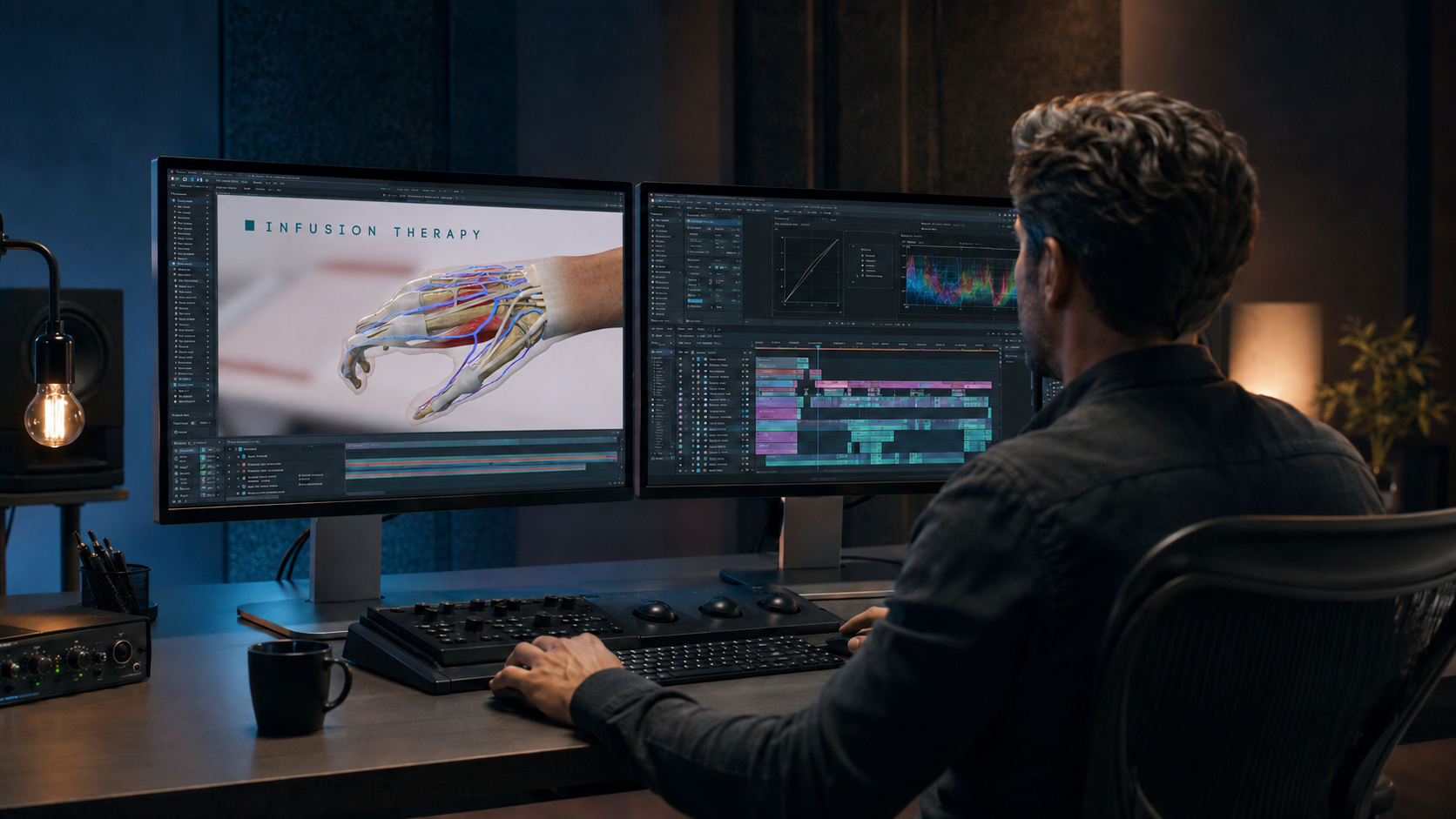
Once the iterations of the pre-animatic videos are approved, the next step is to produce the final animation using high-quality layered 3D visuals. This process begins with our state-of-the-art local GFX render farm, which is equipped with powerful hardware specifically designed to handle the computational demands of rendering complex 3D graphics. By leveraging this extensive network of rendering machines, we can significantly expedite the rendering process, allowing for the creation of high-resolution frames without sacrificing quality or detail.
This efficiency is critical, especially for projects with tight deadlines or extensive visual content, as it enables the team to maintain a steady workflow and keep the project on schedule. After rendering the 3D frames, the next step involves importing these visuals into Adobe After Effects, a leading software for motion graphics and visual effects. In After Effects, the individual frames are organized into compositions that facilitate the integration of additional elements, such as effects, transitions, and titles.
During this phase, the pre-recorded voice-over narration is synchronized with the animated visuals, ensuring that the audio aligns perfectly with the actions and movements occurring on screen. This synchronization is crucial for maintaining the flow and impact of the storytelling, as well-timed audio enhances the overall viewer experience. Once the voice-over is integrated, the team makes any necessary minor adjustments in timing, ensuring that the animations and audio cues work harmoniously.
This may involve tweaking the pacing of certain animations to better match the tone of the narration or adjusting the timing of visual effects to enhance key moments. The After Effects composition also allows for the addition of visual enhancements, such as particle effects, lighting adjustments, and color grading, further refining the look and feel of the final product.
After thorough review and feedback from the creative team, the completed animation is rendered for final output, resulting in a polished, high-quality animation that effectively communicates the intended message while engaging the audience. This comprehensive final animation process ensures that every detail is meticulously crafted, culminating in a visually stunning and narratively compelling end product.

The final delivery phase brings every element of the medical animation together into a polished video that is ready for distribution. After rendering is complete, our team performs final editing, compositing, color correction, and audio mixing. Voiceover, music, sound effects, captions, logos, typography, and other branding elements are carefully integrated to create a cohesive presentation.
We incorporate approved client feedback and conduct a final quality review to confirm visual consistency, technical quality, audio clarity, and alignment with the approved storyboard. Product-specific medical content, terminology, and claims are also confirmed through the client’s final review and approval. Once approved, the animation is mastered and delivered in the formats required for its intended use, including websites, presentations, social media, conferences, training platforms, and broadcast. Deliverables may include MP4, MOV, captioned, uncaptioned, and other customized versions, ensuring the animation is ready for use across the client’s selected media channels.


.png)
.png)

.png)

