.svg)
AI in Scientific Communication: Why Human Expertise Still Matters
Learn how Intervoke combines AI assisted storyboard development, accurate 3D anatomy, medical device animation, and human expertise to create reliable scientific communication.
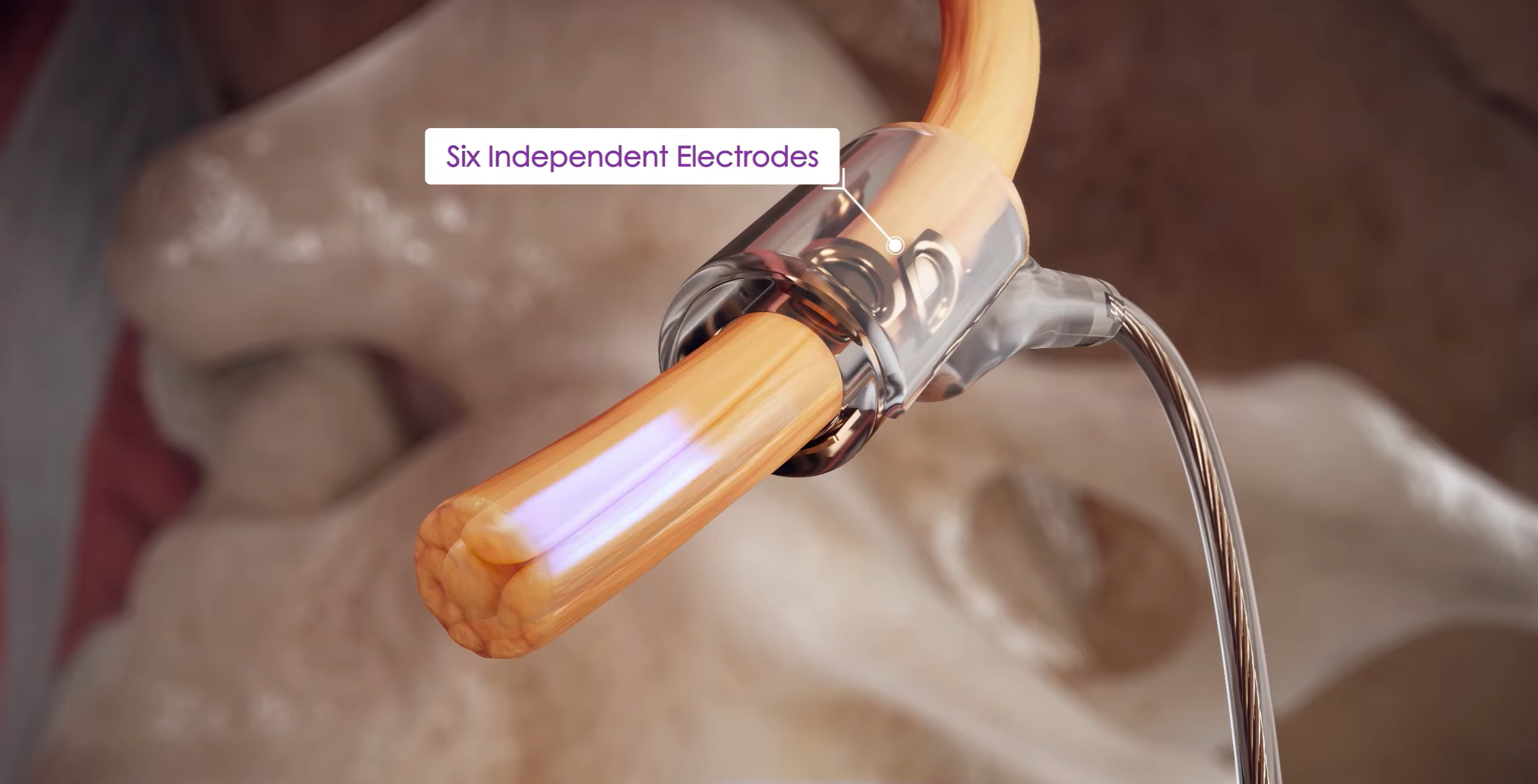
Artificial intelligence is changing how healthcare and life sciences organizations create content, but generating information is not the same as communicating science accurately. At Intervoke, we combine scientific rigor, medical animation, interactive 3D technology, immersive education, and cinematic storytelling to help organizations explain complex science clearly. AI can support this process, but it cannot replace the experience, judgment, proprietary assets, and visual accuracy required for effective scientific communication.
Intervoke works with pharmaceutical, biotechnology, medical device, healthcare, and educational organizations to transform complex information into engaging visual and interactive experiences. This includes Mechanism of Action and Mechanism of Disease animation, medical device visualization, HCP training, patient education, interactive software, and immersive installations. Every project requires careful interpretation of scientific information, a clear understanding of the intended audience, and a communication strategy that protects both scientific integrity and intellectual property.
How AI Can Accelerate Scientific Content Creation
AI can help scientific communication teams work more efficiently by supporting early drafts, organizing source material, adapting approved messaging for different platforms, generating social media copy, creating video descriptions, and repurposing longer content into shorter formats.
For organizations managing multiple communication channels, these capabilities can reduce repetitive work and extend the value of existing scientific content. A medical animation may support a website, HCP presentation, congress display, social media campaign, internal training program, patient education experience, or learning management system. AI can help adapt the supporting language for each use while maintaining a more consistent message.
The value of AI is not simply producing more content. Its greatest value is helping teams develop, organize, and reuse approved scientific content more efficiently.
AI Assisted Storyboard Development
AI can also support the early stages of visual development by helping teams explore concepts, organize scientific narratives, and create preliminary storyboards before full production begins. At Intervoke, AI assisted storyboard development can accelerate ideation and help clients visualize the direction of a medical animation, medical device animation, interactive experience, or immersive educational program.
AI generated storyboard concepts can provide a useful starting point for reviewing composition, visual pacing, camera direction, and narrative flow. However, these concepts are not treated as final scientific visuals. They are refined by Intervoke’s creative, scientific, animation, and development teams to ensure that the story is visually compelling, scientifically accurate, and appropriate for the intended audience.
This allows AI to improve the speed of early concept development while experienced professionals remain responsible for the accuracy and integrity of the final communication.
Why AI Animation Still Depends on Scientifically Accurate 3D Anatomy
AI generated video can create visually impressive imagery, but Mechanism of Action and Mechanism of Disease animations require much more than realistic looking movement. These animations must accurately represent anatomy, physiology, molecular interactions, disease progression, therapeutic activity, spatial relationships, and biological changes over time.
Generative AI does not inherently understand the precise dimensions, tissue relationships, physiological functions, or molecular behaviors that must remain consistent throughout a scientific animation. It may create an image that appears believable while misrepresenting the location, scale, structure, or function of an anatomical feature.
This becomes especially important when content is intended for healthcare professionals, patients, caregivers, investors, regulatory teams, or internal scientific audiences. A visually convincing animation may still be unsuitable for scientific communication if the anatomy or physiology is incorrect.
For this reason, production ready Mechanism of Action and Mechanism of Disease animation must be built upon scientifically validated 3D anatomy, cellular structures, molecular assets, physiological references, approved scientific documentation, and expert review. AI may contribute to the creative process, but it cannot replace the structural scientific foundation required to communicate complex biology accurately.
At Intervoke, scientifically reviewed 3D assets establish the visual framework for the animation. These assets help maintain consistency as the narrative moves between anatomical systems, tissue structures, cellular environments, molecular interactions, and therapeutic mechanisms.
Medical Device Animation Requires Proprietary Product Information
Medical device animation presents an additional challenge because the device itself is often proprietary intellectual property that is not available to a public AI model. Accurate medical device visualization may depend on confidential CAD files, engineering drawings, internal components, product specifications, dimensions, materials, design features, procedural steps, and instructions for use.
AI cannot accurately recreate a proprietary medical device unless the authorized manufacturer provides the necessary information and grants permission for it to be used. Even when a device appears in public marketing materials, patent filings, or photographs, those sources may not reveal every internal component, current design revision, material property, mechanical behavior, or procedural detail required for an accurate scientific animation.
A device may also need to be shown interacting with anatomy during a surgical or therapeutic procedure. This requires precise alignment between the proprietary device geometry and scientifically accurate 3D anatomy. The movement, positioning, deployment, and mechanical function of the device must be represented correctly throughout the animation.
At Intervoke, medical device animations can be developed from authorized client supplied CAD files, engineering references, product documentation, clinical guidance, and procedural information. These proprietary assets are then integrated with scientifically accurate anatomy and refined through custom modeling, animation, lighting, simulation, and visual storytelling.
AI can help support early concepts, storyboard development, or selected production efficiencies, but it does not replace the proprietary device data, engineering interpretation, anatomical foundation, or human expertise required to create an accurate medical device animation.
Scientific Animation Is Built Upon Intellectual Property
Effective scientific animation is rarely created from a prompt alone. It is built upon existing intellectual property, validated scientific information, and custom developed assets.
This intellectual property may include Intervoke’s proprietary 3D anatomy, scientifically reviewed cellular and tissue models, client supplied medical device CAD, approved molecular structures, custom environments, existing animation libraries, product documentation, clinical references, and previously developed visual systems.
These assets provide the structural foundation needed to create animation that is consistent, scalable, and scientifically defensible. They also allow organizations to reuse approved content across multiple communication initiatives instead of recreating every visual from the beginning.
AI can help teams explore how these assets may be presented, organized, or adapted, but it does not automatically possess the proprietary information required to reproduce them accurately. Private medical device data, custom anatomy, therapeutic mechanisms, and client specific scientific information must be intentionally supplied through an authorized and secure workflow.
This distinction is important. AI can assist with content development, but reliable scientific communication still depends on access to validated information and rights cleared intellectual property.
Human Review Protects Scientific Meaning and Context
Scientific communication requires judgment. Human reviewers must determine whether the information is appropriate for the intended audience, whether a claim requires additional context, whether terminology is being used precisely, and whether the final content supports the objectives of the project.
Human expertise is also essential for understanding confidential projects, regulatory boundaries, client permissions, product limitations, brand strategy, and the differences between educational, promotional, and scientific exchange content.
AI may generate a polished explanation, image, or storyboard, but it cannot independently determine whether the final communication represents the science, product, procedure, or audience appropriately.
At Intervoke, technology supports the work, but scientific judgment and creative direction guide it. AI can improve efficiency during appropriate stages of development, while experienced professionals remain responsible for the final result.
From Individual Assets to Connected Scientific Communication
The future of AI in healthcare and life sciences is not simply automated writing, video generation, or social media posting. It is the development of connected scientific communication systems that allow organizations to create, manage, approve, distribute, and reuse content across multiple channels.
A single scientific concept may need to appear in a cinematic medical animation, interactive 3D experience, patient education portal, HCP presentation, congress installation, medical device training program, website, or learning management system.
When each asset is created separately, scientific communication becomes fragmented, expensive, and difficult to maintain. When content is developed from reusable anatomy, device models, animation libraries, and approved scientific assets, organizations gain greater control, consistency, and scalability.
Intervoke helps organizations move beyond isolated deliverables by creating medical animations, interactive software, immersive education, and visual communication systems that can support broader scientific, commercial, educational, and training initiatives.
Intervoke’s Approach to AI and Scientific Communication
Intervoke views AI as a supporting technology rather than a replacement for scientific expertise, proprietary assets, creative experience, or human judgment. AI can help organize information, accelerate storyboard development, support early concept exploration, and extend the value of approved content.
However, production ready scientific communication still depends on accurate 3D anatomy, validated physiology, proprietary medical device information, custom modeling, animation expertise, scientific research, engineering interpretation, and knowledgeable human review.
The strongest scientific communication is created when advanced technology and human expertise work together. AI can improve efficiency, but experienced professionals must ensure that the anatomy is accurate, the device functions correctly, the science is clearly represented, and the final message is meaningful to the intended audience.
Intervoke helps pharmaceutical, biotechnology, medical device, healthcare, and educational organizations transform complex science into engaging medical animations, interactive 3D applications, immersive educational experiences, and scalable scientific communication solutions.
Contact Intervoke to explore how scientifically accurate animation, proprietary 3D assets, AI assisted storyboard development, and interactive technology can support your next scientific communication initiative.
Let’s Get Started
Interested in learning more about how Intervoke can bring your science to life?
Contact us or book a Discovery Call to get started.


.png)
.png)

.png)

