.svg)
How MoA Medical Animation Is Evolving into Immersive Life Science Applications
An immersive MoA experience represents a structural shift in how medical animation is designed and delivered.
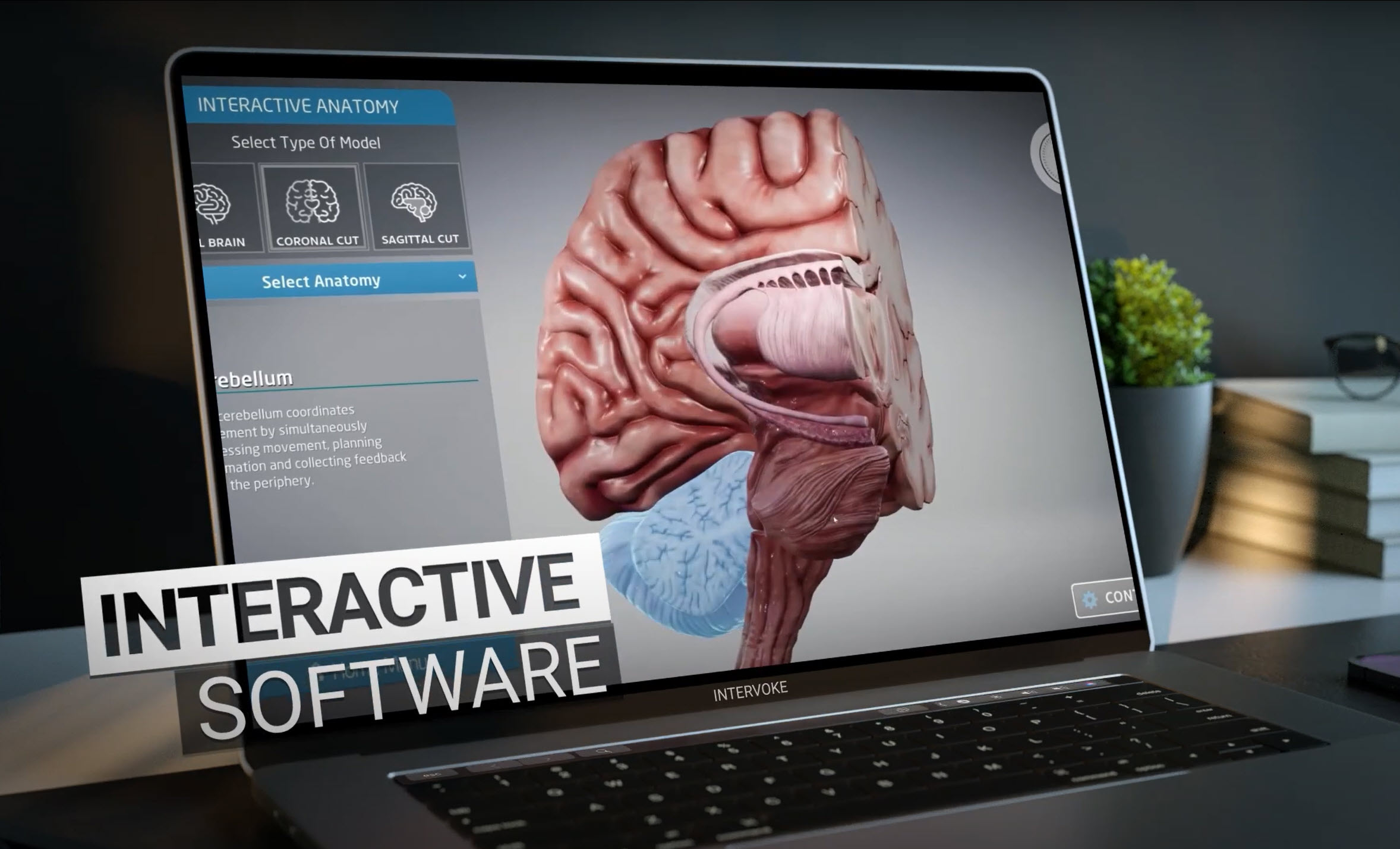
For years, Mechanism of Action (MoA) content in life sciences has been delivered primarily through medical animation videos. These animations are often visually refined, scientifically accurate, and carefully narrated to guide viewers through complex biology. They have long served as a cornerstone of healthcare marketing, medical presentations, and life science presentations.
But the way scientific content is consumed and applied has changed.
Today, MoA content is no longer viewed once, in a single sitting, by a single audience. It is deployed across websites, sales conversations, training environments, conferences, and digital healthcare marketing campaigns. It is interrupted, revisited, repurposed, and expected to remain relevant far beyond a single launch window.
As a result, traditional MoA medical animation is evolving into immersive, modular scientific experiences that function as WebGL applications or downloadable software apps. This evolution reflects a broader shift in how medical animation is used within modern life science presentations and healthcare marketing initiatives.
The Limits of Traditional MoA Medical Animation Videos
Traditional MoA medical animation videos are linear by design. They are built to be watched from start to finish, with narration controlling the pace and sequence of information. Each moment depends on the one before it, and meaning is often tightly coupled to timing and voiceover.
This structure works well for passive viewing scenarios, such as awareness-focused medical presentations or introductory life science presentations delivered online. However, it introduces real limitations once the content is expected to perform across multiple healthcare marketing contexts.
Linear MoA animations are difficult to interrupt, difficult to navigate nonlinearly, and difficult to adapt in real time. In live sales discussions, training environments, or interactive medical presentations, this rigidity often limits usability. From a marketing perspective, these animations are also frequently tied to a specific campaign or narrative, which shortens their shelf life and makes updates costly.
As healthcare marketing becomes more interactive and more distributed, life science teams are increasingly looking for medical animation that can do more than play.
What an Immersive MoA Experience Actually Is
An immersive MoA experience represents a structural shift in how medical animation is designed and delivered.
Instead of creating a single, linear animation, the MoA is built from modular interactive components. Each module represents a distinct scientific concept, such as ligand binding, receptor activation, downstream signaling, or clinical outcome. These modules are designed to stand on their own, without requiring a fixed start point or continuous narration to remain clear.
In this model, the MoA becomes an explorable scientific system, not a single explanatory video.
This approach allows users to interact with the science in ways that align with real-world use. Modules can be explored individually, revisited as needed, and combined differently depending on the context of the medical presentation or healthcare marketing initiative.
How Immersive MoA Experiences Are Delivered as Applications
Once MoA content is structured modularly, it can be delivered inside different application containers. The two most common are browser-based WebGL applications and downloadable software applications.
The underlying science remains consistent. The way it is presented changes.
WebGL Applications for Healthcare Marketing and Life Science Presentations
A WebGL MoA experience runs directly in a web browser and requires no installation. It can be embedded into websites, portals, or campaign pages, making it ideal for healthcare marketing initiatives that prioritize accessibility and reach.
In this format, immersive medical animation becomes part of:
- Product and therapy-area websites
- Branded HCP education portals
- Digital life science presentations
- Conference and campaign microsites
Users interact with the MoA through intuitive controls, exploring pathways, toggling layers, and navigating between modules. Each module can often be accessed independently, allowing the experience to adapt to different audiences and levels of scientific familiarity.
Because WebGL medical presentations live on the web, they are easy to update and scale. Content can be refined over time, supporting long-term healthcare marketing strategies without requiring new animation builds.
Downloadable Software Applications for Sales and Training
The same immersive MoA experience can also be packaged as a downloadable software application, most commonly for tablets used in sales enablement and internal training.
In this format, the medical animation is optimized for touch interaction, speed, and offline reliability. Modules load instantly, allowing representatives or educators to move directly to relevant scientific concepts during live discussions.
These applications are commonly used in:
- Sales enablement environments
- MSL and internal training programs
- Controlled enterprise medical presentations
While distribution is more managed than WebGL, downloadable applications offer reliability and performance that are critical in real-world sales and training settings.
One Scientific Foundation, Multiple Medical Presentation Formats
A major advantage of immersive modular MoA applications is that the same scientific foundation can support multiple medical presentation formats.
For example, a healthcare marketing team may deploy a guided MoA experience on a product website, while sales teams access the same modules inside a tablet application. Education teams may organize those modules into structured life science presentations for training or continuing education.
The science does not change. The presentation adapts.
This flexibility allows life science organizations to align medical animation with different marketing and communication goals without rebuilding content.
The Impact on Healthcare Marketing and Sales Performance
Immersive MoA applications fundamentally change how medical animation performs over time.
Instead of functioning as a one-off asset, the MoA becomes a reusable scientific resource that supports multiple healthcare marketing initiatives. Sales teams benefit from greater flexibility and clarity during live discussions. Marketing teams benefit from consistent scientific messaging across channels. Training teams benefit from structured, explorable life science presentations.
Most importantly, modular immersive applications significantly extend the shelf life of medical animation. Individual modules can be updated or expanded without reanimating the entire experience, allowing the content to evolve alongside the product and the market.
The Strategic Advantage of Immersive Medical Animation
The evolution from MoA animation videos to immersive applications is not about abandoning medical animation. It is about maximizing its value.
By designing medical animation as modular, interactive experiences that can be delivered as WebGL apps or downloadable software, life science brands gain greater flexibility, broader deployment, stronger engagement, and longer-term relevance across healthcare marketing efforts.
The Takeaway
MoA medical animation is no longer limited to linear video. When designed as an immersive, modular application, it becomes a powerful foundation for modern medical presentations, life science presentations, and healthcare marketing.
This shift allows complex mechanisms to be communicated more clearly, deployed more widely, and reused far longer than traditional animation alone — making immersive MoA applications the next evolution of scientific storytelling.
Set up a Discovery Call to learn more about Intervoke’s approach to compliant immersive medical education applications.
Let’s Get Started
Interested in learning more about how Intervoke can bring your science to life?
Contact us or book a Discovery Call to get started.


.png)
.png)

.png)

